Hidden Water Leak Detection in Gloucester Township, NJ
Water has a frustrating tendency to travel along framing and pipes before ever showing itself to the homeowner. A stain on your living room ceiling might actually be originating from a bathroom leak ten feet away on the floor above. When you are dealing with hidden plumbing leaks, guessing where to cut open the drywall usually results in unnecessary damage, mess, and expense.
Our professional water leak detection Gloucester Township NJ service eliminates the guesswork. Using state-of-the-art diagnostic tools, we track the moisture back to its true source, protecting your home while providing the exact information needed for a targeted repair.
Signs of Concealed Plumbing Leaks
Because these issues develop out of sight, paying attention to the subtle warning signs is crucial. A high water bill leak Gloucester Township NJ homeowners experience is often the first red flag that water is escaping somewhere in the system. You should also watch for:
- Wall and ceiling damage: Peeling paint, bubbling wallpaper, or expanding brown water stains on drywall and ceilings.
- Meter movement: If your water meter's leak indicator continues to spin when all faucets and appliances are turned off, a pressurized line is compromised.
- Odors and mold: Persistent musty or mold-like odors in specific rooms or cabinets, indicating long-term hidden moisture.
- Warm floors: Unexpectedly warm areas on tile or hardwood, which could indicate a hot water leak behind wall Gloucester Township infrastructure or underneath the subfloor.
Locating the Source Without Demolition
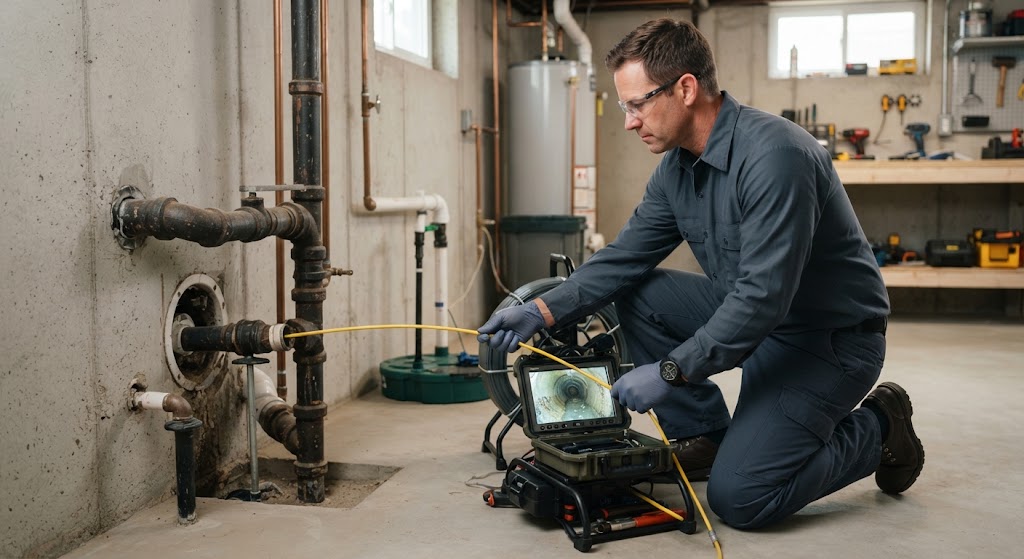
The core of our hidden water leak detection Gloucester Township service is non-invasive investigation. We start by moisture mapping the affected areas to understand how the water is spreading. Using thermal imaging cameras, we can look for the subtle temperature differences caused by evaporation or hot water escaping into wall cavities.
When the visual evidence isn't enough, we rely on acoustic listening devices to hear the hiss of pressurized water escaping from a fitting. In particularly difficult scenarios where pipes are deeply embedded, we utilize pressure testing and sometimes tracer gas—a safe, non-toxic gas introduced into the empty pipe that rises through floors and walls to reveal the exact pinpoint location to our sensors.
Moving Forward with Repair Options
Once we identify the exact location of the failure behind your walls or ceilings, the subsequent repair options become straightforward. Instead of tearing down entire walls, a plumber can make a small, precise opening exactly where the repair is needed. Identifying the source before any drywall is removed minimizes the overall cost and hassle of restoring your property. If the situation is severe and rapidly flooding your home, remember to shut off the main water valve immediately and treat it as an emergency leak repair scenario.
Frequently Asked Questions
How do I know if I have a leak behind my walls?
Signs include peeling paint, damp or discolored drywall, musty odors, the sound of dripping inside the wall cavity, or an unexpectedly high water bill despite normal usage.
Will finding the leak require cutting open my walls?
No. We use thermal imaging, moisture mapping, and acoustic equipment to locate the exact source of the moisture before any drywall needs to be removed.
What happens after the concealed leak is located?
Once pinpointed, we explain the cause of the failure and the necessary repair approach, which allows for a minimal, targeted opening to fix the plumbing.
Related Services
We also offer Slab Leak Detection for issues under concrete floors, and Pipe Leak Repair for comprehensive plumbing solutions once the source is found.